Access restricted packages (using myAnalog login)
Some components in CodeFusion Studio are distributed as restricted packages. These packages are available through managed package remotes, and may require you to authenticate with your myAnalog account before they can be installed.
After you log in, CodeFusion Studio configures the managed remotes automatically.
Note
If you use cfsutil for automation or CI/CD workflows, you can authenticate using an API key instead of an interactive myAnalog login. Set the CFS_API_KEY environment variable to your key value before running a command. See API key authentication for details.
Note
Access to some packages is restricted to authorized users. If you believe you should have access but cannot see the required packages, contact your account representative.
Login to myAnalog
Before you access restricted packages, you must first log in to myAnalog.
Tip
If you've logged in before, you can check your login status with:
- Command Palette:
(CFS) myAnalog Status - CLI:
cfsutil myanalog status
Option 1: From the Command Palette
- Open the Command Palette from the Manage gear icon or using the keyboard shortcut (
Ctrl+Shift+PorCmd+Shift+Pon macOS).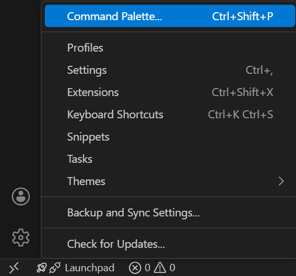

- Type
(CFS) myAnalog Loginand press Enter, or select it from the list.

-
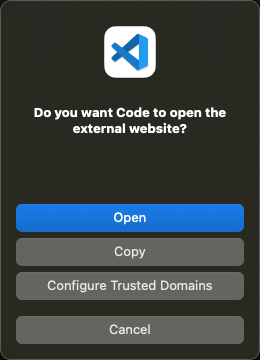
Click Open to launch the browser. If the browser does not open, use the Copy button to copy the link and paste it in your browser.
-
On the myAnalog login page, use the sign-in method associated with your account:
- Email and password: Enter your registered email address and password, then select Log in. If you don’t have a myAnalog account, register at analog.com/myAnalog.
- Google Account: Select Google Account, then sign in with your Google credentials.
- LinkedIn Account: Select LinkedIn Account, then sign in with your LinkedIn credentials.
- Analog Devices Account: If you are an Analog Devices employee or contractor on a managed device, select Analog Devices Account, then sign in with your Analog Devices credentials.

-
When the Sign-in Successful page appears, close the browser and return to VS Code.
-
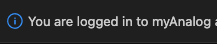
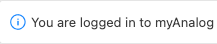
A VS Code notification confirms you are logged in.
Option 2: From the command line cfsutil
To access cfsutil, open a new terminal (View > Terminal or Ctrl+`).
Note
If you want to run cfsutil from a system terminal outside VS Code, refer to the note in the Optional: add a custom package remote section below for the executable path to use on your platform.
Complete the following steps:
- In the terminal panel, click the dropdown arrow next to the + icon.
- Select CFS Terminal from the list.


-
Authenticate using your myAnalog account. A browser opens automatically.
cfsutil myanalog login -
On the myAnalog login page, use the sign-in method associated with your account:
- Email and password: Enter your registered email address and password, then select Log in. If you don’t have a myAnalog account, register at analog.com/myAnalog.
- Google Account: Select Google Account, then sign in with your Google credentials.
- LinkedIn Account: Select LinkedIn Account, then sign in with your LinkedIn credentials.
- Analog Devices Account: If you are an Analog Devices employee or contractor on a managed device, select Analog Devices Account, then sign in with your Analog Devices credentials.
If the browser does not open, copy the authentication link from the terminal and paste it into your browser manually.
-
When the Sign-in Successful page appears, close the browser and return to VS Code.
Important
For session-expiration and reauthentication guidance, see Restricted packages not appearing.
Optional: add a custom package remote
You only need this section if your organization provides an additional custom package server.
Option 1: Add a custom remote from the Command Palette
- Open the Command Palette from the Manage gear icon or use the keyboard shortcut (
Ctrl+Shift+PorCmd+Shift+Pon macOS).
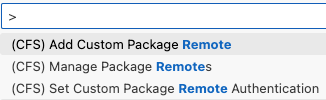
- Type
(CFS) Add Custom Package Remoteand press Enter, or select it from the list.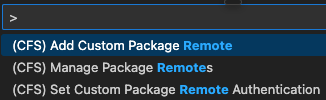
- Enter the remote name and URL.
-
Select the authentication method for that custom remote.


Important
To cancel or restart this process, press Escape.
Option 2: Add a custom remote from the command line cfsutil
- In the terminal panel, click the dropdown arrow next to the + icon.
- Select CFS Terminal from the list.
-
Run the following command to add the custom remote:
cfsutil pkg add-remote <remote-name> <url>Example
cfsutil pkg add-remote myserver https://my.server.url -
Configure authentication for the custom remote:
cfsutil pkg auth-remote <remote-name> --user <username>Example
cfsutil pkg auth-remote myserver --user USERNAMEYou will be prompted to enter the password.
Note
To use no authentication for a custom remote, run
cfsutil pkg auth-remote <remote-name> --none.
Note
To run cfsutil from a system terminal outside VS Code, run the following executable:
- Windows:
<CFS-Install>/Utils/cfsutil/bin/cfsutil.cmd. - Linux/macOS:
<CFS-Install>/Utils/cfsutil/bin/cfsutil.
Important
Your myAnalog login session may expire after a period of inactivity. If this happens, you will need to reauthenticate to access restricted packages. For more details, see Restricted packages not appearing.
Verify your setup
After login, verify that managed remotes are configured correctly.
Run the following command in the CFS Terminal:
cfsutil pkg list-remotes
Next steps
Now that you are logged in, you can proceed to install packages in CodeFusion Studio. Choose your preferred method below:
- To install packages from the Command Palette, see Manage packages from VS Code Command Palette.
- To install packages using the command line, see Manage packages from the command line (
cfsutil).